
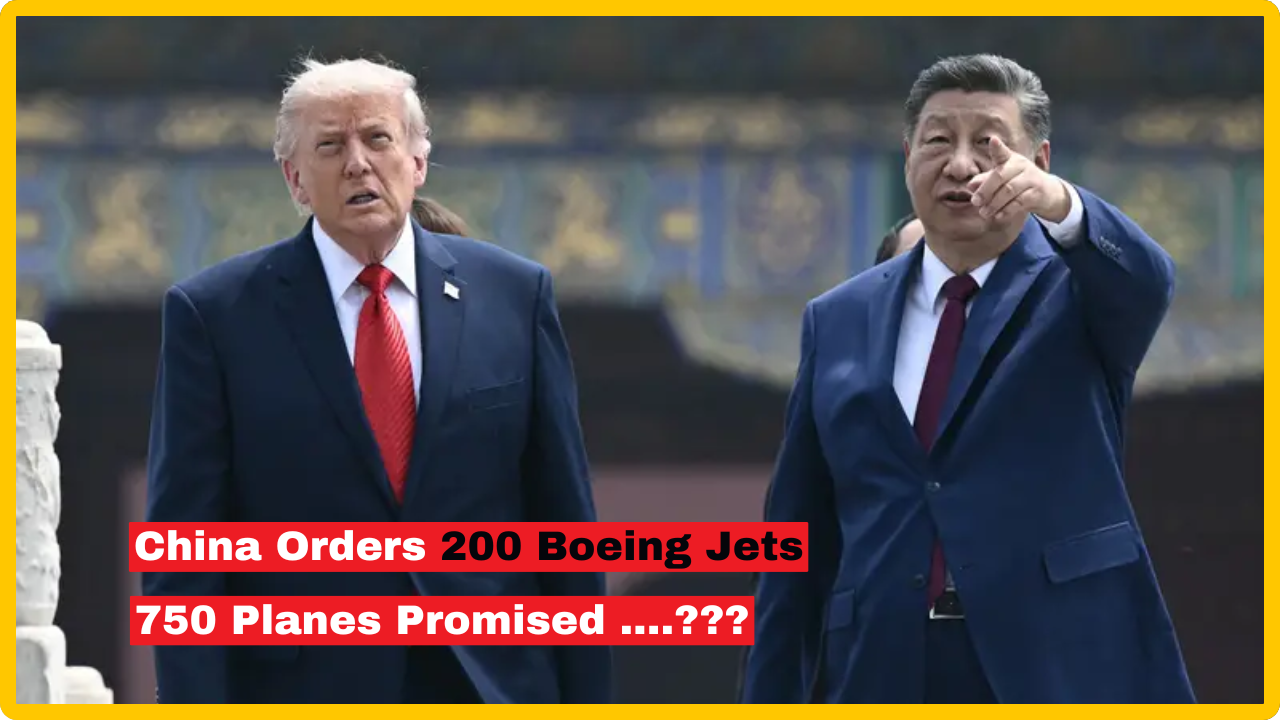
China Boeing Order Could Be the Largest Ever, Trump Says
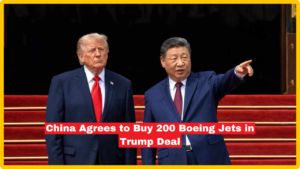
Despite the magnitude of Trump’s announcement, key details of the agreement remain to be formally documented. Rather than formally announcing an agreement — as is customary between an aircraft manufacturer and a customer — Trump made the disclosure during a television interview appearance, stating that China would buy 200 “big” aircraft.
The White House has not released details of the deal, and Boeing itself has not commented publicly. This gap between a presidential announcement and a formal commercial order has led aviation industry analysts to note that while the political intent appears clear, the contractual specifics — including aircraft models, delivery schedules, and pricing terms — remain to be locked in.
Still, the trajectory of events during the Beijing summit left little doubt that the deal had substantial backing. Boeing CEO Kelly Ortberg had joined Trump for the trip to Beijing as part of a large group of CEOs seeking to sell products and services to China. Senior industry observers widely noted that a CEO of Ortberg’s standing would not travel on such a high-profile diplomatic mission without a near-certain commercial outcome in hand.
The Road Back: Boeing’s Decade-Long Absence from China
To fully appreciate the weight of this China Boeing 750 jets order, it helps to understand how long Boeing has been largely frozen out of the Chinese market and why.
The company’s relationship with Chinese civil aviation authorities deteriorated sharply in March 2019, when China became the first country in the world to ground the Boeing 737 MAX following a pair of fatal crashes — the Lion Air disaster in 2018 and the Ethiopian Airlines tragedy just months later. Chinese regulators were also among the very last to lift that ban, maintaining it for four full years before allowing the MAX to resume commercial operations in China.
Even after services resumed in early 2024, progress was slow and fitful. Political tensions between Washington and Beijing added another layer of friction, compounding the technical and regulatory obstacles that had already piled up. During this extended drought, European rival Airbus moved aggressively into the vacuum, securing enormous Chinese orders and cementing its position across all three of China’s major state-owned carriers — Air China, China Eastern Airlines, and China Southern Airlines.
The contrast in fortunes was stark. While Airbus was signing multibillion-dollar deals and delivering aircraft, Boeing’s Chinese pipeline had largely dried up. Prior to the summit, Boeing had not secured a major Chinese order since Trump’s first-term state visit in 2017.
What Aircraft and Engines Are Involved?
While Trump did not specify exact aircraft types in his public remarks, industry context makes the 737 MAX the overwhelmingly likely primary model. The narrow-body jet is Boeing’s highest-volume commercial product and is directly comparable to the Airbus A320neo family that Chinese carriers have been purchasing in large numbers in recent years.
Trump told reporters that the planes would have General Electric engines, adding a significant GE Aerospace component to the overall trade package. The GE LEAP-1B engine is the exclusive powerplant for the 737 MAX, meaning the engine commitment directly tracks with the aircraft order and adds a substantial additional revenue stream for the American industrial giant.
How This Fits Into Trump’s Broader Trade Agenda
The Boeing announcement was the centerpiece of a broader package of trade commitments Trump described coming out of the Beijing summit. Beyond aircraft, Trump told Fox News that Xi committed to helping the US with Iran and agreed to buy US soybeans, oil, liquified natural gas, and other energy products.
The summit itself followed months of diplomatic groundwork between the two governments. After a fragile tariff truce was reached in October 2025, both sides had been working toward a set of high-visibility trade wins that could be announced during a presidential visit. The Boeing deal fits squarely into that template — a large, tangible, jobs-heavy commitment that plays well politically in both countries.
Another “Boeing gift” for Trump would follow a precedent set in 2017, when a $37 billion, 300-plane contract was announced during his first state visit to China. The current potential deal, if the full 750-plane commitment were exercised, would dwarf that earlier agreement by a wide margin.
What 750 Jets Would Mean for Boeing
The sheer scale of a potential 750-aircraft Chinese order would reshape Boeing’s commercial outlook for years, possibly decades. At list prices of approximately $100 million per narrow-body aircraft — though actual transaction prices typically reflect significant discounts — even the initial 200-plane tranche represents a deal worth roughly $20 billion on paper.
A full 750-plane order would be, in Trump’s own words, the largest commercial aircraft order ever placed. It would immediately strengthen Boeing’s production planning, help stabilize its supplier network, and signal to the global aviation industry that the 737 MAX has fully recovered its status as a trusted commercial platform.
China is forecast to become the world’s single largest commercial aviation market over the next two decades, with analysts projecting that the country’s commercial fleet could nearly double to close to 10,000 aircraft by the early 2040s. Locking in a major share of that demand now could prove strategically invaluable.
Cautious Optimism Among Analysts
Aviation analysts and trade economists have reacted to the announcement with measured optimism, welcoming the headline figures while flagging the absence of a formal order filing.
Observers note that the deal’s ultimate scope will depend on factors beyond the current diplomatic goodwill — including how quickly Boeing can ramp up 737 MAX production to meet Chinese delivery timelines, the pace of approval by China’s civil aviation regulator, and whether broader US-China geopolitical relations remain stable enough to see the full order through.
China’s state-supported domestic aircraft manufacturer, COMAC, also presents a long-term competitive variable. Beijing has encouraged its national carriers to support the home-grown C919 narrow-body jet, which directly competes with the 737 MAX. Whether Chinese carriers will continue prioritizing Boeing purchases over domestic alternatives will be a factor to watch as the relationship evolves.
Conclusion
The announcement that China may ultimately purchase up to 750 Boeing jets — beginning with an initial commitment of 200 aircraft paired with a major General Electric engine deal — represents one of the most significant milestones in US-China commercial aviation in years. It would mark Boeing’s definitive return to a market it was absent from for nearly a decade, and potentially deliver the largest single aviation order in history. As the formal contractual details are still pending, all eyes now turn to when — and whether — Boeing and its Chinese partners will make the deal official.
If China does follow through on the full 750-plane commitment, do you think it will fundamentally shift the balance of power between Boeing and Airbus in the global aviation market?
Frequently Asked Questions (FAQ)
Q1: How many Boeing jets has China committed to buying, and could the order grow?
China has confirmed a commitment to purchase 200 Boeing jets. President Trump has stated that the order could grow to as many as 750 aircraft if China is satisfied with the performance and delivery of the initial 200 planes — a figure that would represent the largest commercial aviation order ever recorded.
Q2: What role does General Electric play in this deal?
Alongside the Boeing aircraft commitment, Trump announced that China also agreed to purchase up to 450 aircraft engines from General Electric. Since GE’s LEAP-1B engine is the exclusive powerplant for the Boeing 737 MAX, the engine deal is closely tied to the overall aircraft order.
Q3: Why has Boeing been absent from the Chinese market for so long?
Boeing was effectively shut out of the Chinese market starting in 2019, when China became the first country to ground the 737 MAX following two fatal crashes. Chinese regulators were among the last to lift the ban, and ongoing US-China trade tensions further delayed Boeing’s commercial recovery in China. This deal, if formally finalized, would mark Boeing’s first major Chinese order since 2017.



Be First to Comment