
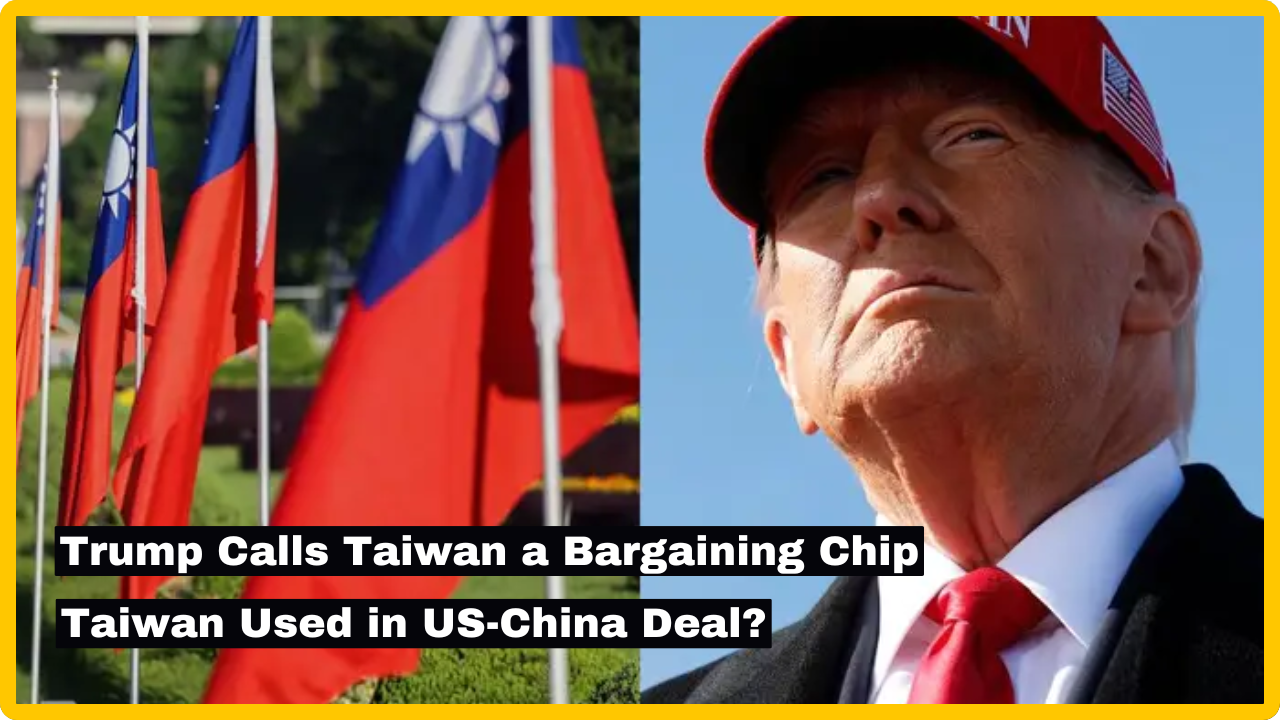
The already complex relationship between Washington, Taipei, and Beijing took a sharp new turn this weekend after President Donald Trump suggested that pending Taiwan US arms sales could serve as a negotiating tool in his dealings with China. Taiwan’s president responded swiftly and directly, pushing back against what Taipei views as any ambiguity about the island’s security commitments from its most critical ally. The exchange has set off a broader debate in Washington and across the Indo-Pacific about the long-term reliability of American support for Taiwan — and what it means when the president frames that support as a diplomatic card to be played rather than an ironclad commitment.
Taiwan President Lai Ching-te Defends US Arms Sales as Regional Deterrent
Speaking from Taipei on Sunday, May 17, 2026, President Lai Ching-te issued a pointed and carefully worded statement in response to Trump’s latest comments. Taiwan’s president stressed that arms purchases from the United States are the most important deterrent of regional conflict and instability, adding that US arms sales to Taiwan and security cooperation between the two sides are not only governed by law but also a catalyst for regional peace and stability.
Lai’s statement struck a tone that was both grateful and assertive — acknowledging Trump’s past support while firmly reframing the purpose of Taiwan US arms sales in security terms rather than transactional ones.
Lai said:
“We thank President Trump for his continued support for peace and stability across the Taiwan Strait since his first term, including the continuous increase in the scale and amount of arms sales to Taiwan.”
The statement was a diplomatic effort to de-escalate the anxiety that had rippled across Taiwan following Trump’s remarks earlier in the week, while simultaneously making clear that Taipei views the arms relationship with Washington as a matter of national survival, not a negotiable political commodity.
What Trump Said That Alarmed Taipei
The source of Taiwan’s concern traced directly back to Trump’s comments on Friday, May 15, as he flew back to Washington aboard Air Force One after completing a three-day state visit to Beijing.
In an interview aired on Fox News, just as Trump wrapped up his high-stakes visit to China, he said he has yet to greenlight a new $14 billion arms package to Taiwan and that it “depends on China.”
Trump said:
“It’s a very good negotiating chip for us frankly.”
The phrase landed in Taipei like a thunderclap. For Taiwan’s government and its supporters, hearing a sitting US president characterize weapons intended for the island’s defense as a bargaining chip with the very country that openly claims sovereignty over Taiwan was a deeply unsettling signal.
Trump also told reporters he made “no commitment either way” on the Taiwan arms issue and declined to publicly state whether the US would defend Taiwan in the event of a Chinese attack. When asked whether he would intervene militarily if China attacked, Trump said:
“That question was asked to me today by President Xi. I said, ‘I don’t talk about, I don’t talk about that.'”
The deliberate ambiguity — while sometimes described by analysts as strategic — fed considerable unease both in Taipei and among members of both parties in the US Congress.
The $14 Billion Package Sitting on Trump’s Desk
The arms package in question is not hypothetical or newly proposed. Trump has been delaying the latest round of arms sales, for months refusing to sign off on the record $14 billion package that was approved in January 2025, despite urging from some lawmakers.
This package follows a record-breaking authorization that preceded it. Trump already approved in December a record-breaking $11 billion arms package to Taiwan, including missiles, drones, artillery systems, and military software.
That first package angered Beijing and prompted Chinese military exercises near the island. The larger $14 billion package, which has been cleared by Congress, now sits in a kind of diplomatic limbo — its release apparently contingent on the outcome of Trump’s broader negotiating strategy with China.
China’s Position: Taiwan Is Non-Negotiable
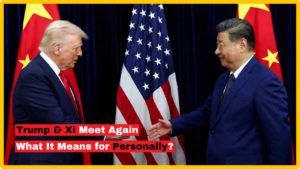
The backdrop to all of this is the strong position Beijing staked out during the summit itself. China has framed Taiwan as “the most important issue in China-US relations” during Chinese President Xi Jinping’s recent talks with Trump. In one of his strongest statements to date, Xi on Thursday warned Trump of “clashes and even conflicts” if the issue of Taiwan was not handled properly.
Xi’s warning was among the most direct public statements from a Chinese leader to a sitting US president on the Taiwan question in recent memory, and it underscored just how seriously Beijing views any American military support for the island.
Trump confirmed that Xi had raised the US weapons sale during their summit discussions. “We talked a lot about Taiwan,” Trump told reporters. The acknowledgment that Xi brought the arms package directly into the summit conversation — and that Trump heard him out — is precisely what alarmed lawmakers on both sides of the aisle in Washington.
The Legal Framework Underpinning US Arms Sales to Taiwan
Lai’s statement deliberately referenced the legal basis for Taiwan US arms sales, and for good reason. The United States has been bound by domestic law to provide Taiwan with defensive arms since 1979, when Congress passed the Taiwan Relations Act following the formal switch of diplomatic recognition from Taipei to Beijing.
The law requires Washington to provide Taiwan with weapons of a defensive nature and to treat any attempt to determine Taiwan’s future by non-peaceful means as a matter of grave concern. This legal obligation exists independently of any executive preference, meaning that even if a president wishes to pause or condition arms sales, Congress has its own authority and appetite to push back.
Taiwan US Arms Sales Trump Called a Bargaining Chip
The biggest fear for Taiwan and its supporters heading into the Trump-Xi summit was that Trump would agree to change official US policy on Taiwan, perhaps to express explicit opposition to Taiwanese independence. Secretary of State Marco Rubio affirmed that US policy was unchanged following the summit.
That clarification from Rubio offered some reassurance, though it did not fully quiet the concerns stirred by Trump’s own more ambiguous comments.
Congress Pushes Back Hard
The reaction from Capitol Hill was swift and bipartisan — a rare alignment in Washington’s deeply polarized political environment. Lawmakers in both parties said the US should continue to provide arms to Taiwan. House Foreign Affairs Committee Ranking Member Gregory Meeks said: “I think it is important for us to make sure that Taiwan does have what it needs to defend itself.” Meeks also argued Xi has
“leverage over the president” but not “over the United States Congress and the American people,” adding that Congress has already acted on the package and “the president is the one that’s holding it up.”
Speaker Mike Johnson also reiterated his support for Taiwan, though he said he had not yet received a full readout from Trump on the talks with Xi.
The bipartisan pushback reflects Taiwan’s unusually strong standing on Capitol Hill, where the island has long been seen as both a democratic ally and a strategic bulwark against Chinese regional dominance.
US Trade Representative Signals Measured Approach
US Trade Representative Jamieson Greer, speaking on Sunday, said that the president is “considering how to move forward” on the arms sales to Taiwan, noting that previous US presidents had paused sales in the past and that Trump would need to weigh many factors. “When the president makes a decision on national security, it’s really based on American security needs first,” Greer said. zeebiz
His comments suggested the White House is not yet prepared to make a final call on the $14 billion package, leaving the situation in an uncomfortable state of suspension that continues to unsettle Taipei and its supporters in Washington.
The Broader Stakes: What Taiwan’s Security Means for the Region
The Taiwan question carries implications far beyond the island itself. A change in the security status of Taiwan — whether through conflict, coercion, or a quiet erosion of American commitment — would reverberate across the entire Indo-Pacific. Japan, South Korea, the Philippines, and Australia all watch developments in the Taiwan Strait with acute attention, knowing that American credibility in that theater affects their own security calculus.
China and Taiwan have been governed separately since 1949, when the Communist Party rose to power in Beijing following a civil war. For the seven decades since, the status quo — uneasy, contested, but broadly stable — has been maintained in large part through the implicit and explicit backing of the United States. Any suggestion that this backing is negotiable introduces a new and dangerous variable into a region already navigating significant tensions.
Conclusion
Taiwan’s President Lai Ching-te made it unambiguously clear on Sunday that his government views Taiwan US arms sales not as a diplomatic favor or a tradable commodity, but as a legal obligation and the foundation of regional stability. Trump’s framing of the pending $14 billion package as a “bargaining chip” with Beijing has injected fresh uncertainty into one of the most closely watched security relationships in the world. With Congress pushing back, Taiwan pushing back, and China pushing forward, the coming weeks will likely determine whether the pause on the arms package becomes a policy shift or simply a diplomatic pause.
Do you think the United States should treat arms sales to Taiwan as a firm security commitment, or is using them as diplomatic leverage with China a legitimate foreign policy tool?
Frequently Asked Questions (FAQ)
Q1: What did Trump mean when he called Taiwan arms sales a “bargaining chip”?
During an interview on May 15, 2026, Trump said he has not yet approved a pending $14 billion arms package for Taiwan and that moving forward on it “depends on China.” He described the arms sale as “a very good negotiating chip,” suggesting it could be leveraged in his broader diplomatic and trade negotiations with Beijing. The comment alarmed Taiwan and drew swift bipartisan pushback from US lawmakers.
Q2: What is the current status of US arms sales to Taiwan?
The Trump administration approved a record $11 billion arms package for Taiwan in December 2025, covering missiles, drones, artillery systems, and military software. A separate $14 billion package was approved by Congress in January 2025 but has not yet been authorized for delivery by the president. That second, larger package remains pending as of May 2026.
Q3: How did Taiwan’s government respond to Trump’s comments?
President Lai Ching-te issued a formal statement on May 17, 2026, stressing that US arms sales to Taiwan are the most important deterrent of regional conflict, legally grounded in US law, and a catalyst for peace and stability across the Taiwan Strait. Lai thanked Trump for his past support while firmly reframing the arms relationship in strategic and security terms rather than transactional ones.
Be First to Comment