
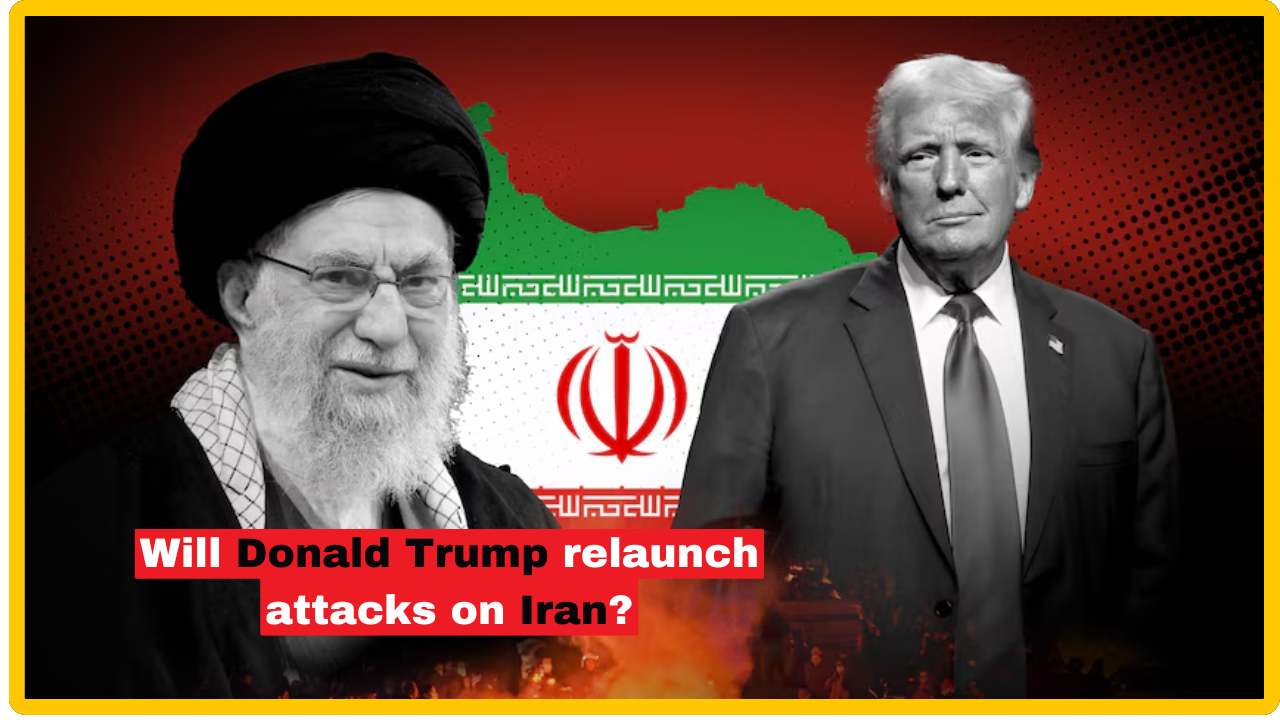
The all details you need to know about Trump Iran Ceasefire are here, The fragile ceasefire between the United States and Iran is teetering on the edge of collapse, with President Donald Trump openly warning that a fresh round of military strikes on Iran could be imminent. After months of war, back-channel diplomacy, and escalating tensions in the Strait of Hormuz, the question on the minds of global leaders, energy markets, and everyday observers is the same: will Trump relaunch attacks on Iran — and if so, what would that look like?
Ceasefire Declared “On Life Support” After Iran’s Rejected Proposal
President Trump declared on Monday, May 11, 2026, that the U.S. ceasefire with Iran was “on life support” after he received what he described as Tehran’s “garbage” response to a U.S. proposal for ending the war. The sharp language signaled a major deterioration in negotiations that just weeks ago appeared to be gaining ground.
Trump has grown increasingly frustrated with how the Iranians are handling negotiations to end the war, and some Trump aides say that he is now more seriously considering a resumption of major combat operations than he has in recent weeks.
The administration announced a new round of sanctions against Iran, and Trump said he would meet with his top military commanders to discuss next steps. These are not the words of a president content to let diplomacy take its natural course — they reflect a commander-in-chief weighing his military options in real time.
How Did the US-Iran War Begin?
To understand the current crisis, it is necessary to look back at how the conflict escalated to this point.
On June 22, 2025, the United States Air Force and Navy attacked three nuclear facilities in Iran as part of the Twelve-Day War, under the code name Operation Midnight Hammer. The Fordow Uranium Enrichment Plant, the Natanz Nuclear Facility, and the Isfahan Nuclear Technology Center were targeted with fourteen GBU-57A/B MOP “bunker buster” bombs carried by B-2 Spirit stealth bombers, and Tomahawk missiles fired from a submarine.
The situation worsened rapidly. The conflict escalated when the US and Israel launched airstrikes on Iran, targeting military and government sites and assassinating several Iranian officials, including Supreme Leader Ali Khamenei. Iran retaliated with strikes on U.S. bases, Gulf Arab nations, and attempted to close the critical Strait of Hormuz — a chokepoint through which a significant portion of the world’s oil supply flows.
The Strait of Hormuz: A Global Economic Flashpoint
Among the most pressing reasons Trump might relaunch large-scale attacks on Iran is the ongoing crisis in the Strait of Hormuz. The U.S. military said Iran attacked three American warships transiting the Strait of Hormuz with missiles, drones, and small assault boats. The Pentagon said all the threats were destroyed, and that “self-defense strikes” against Iranian ports were launched in response.
Trump’s response was unambiguous.
“They trifled with us today. We blew them away,” he said. “They should not have done that today.” He warned that if there was no ceasefire, the world would see “one big glow coming out of Iran.”
On April 13, the US launched a counter-blockade of the Strait, targeting all ships seeking to reach Iranian ports. The reopening of the strait is a major issue in ongoing Pakistani-mediated talks. Iran has threatened military action if the U.S. blockade does not end. President Trump has threatened extensive attacks on Iranian infrastructure if Iran does not reopen the Strait.
The economic fallout has been enormous. Schools across the UAE and Gulf states have moved to remote learning, oil prices have spiked, and global shipping lanes remain in a state of dangerous uncertainty.
What Iran’s Latest Proposal Said — And Why Trump Rejected It
The negotiations deadlock between the US and Iran stems from differing priorities, with President Trump seeking a “quick and easy” triumph that includes immediate concessions on Iran’s nuclear program, while Tehran is determined to delay those demands and snag its own concessions first. In one of its proposals, Iran put forward a staggered, phased approach to negotiations.
Officials said the proposal included some concessions on Iran’s disputed nuclear program, but Trump dismissed it as “garbage.” The stalled diplomacy and recent exchanges of fire could tip the Middle East back into open warfare and prolong the worldwide energy crisis sparked by the conflict, with Iran’s chokehold on the Strait of Hormuz and America’s blockade of Iranian ports still in place.
Iran’s foreign minister, Abbas Araghchi, pushed back sharply, writing that “Every time a diplomatic solution is on the table, the U.S. opts for a reckless military adventure.”
Iran’s Nuclear Program: The Core of the Dispute
The question of nuclear enrichment remains the central obstacle to any lasting peace deal. A July 2025 Pentagon assessment found that Iran’s nuclear program was likely set back around two years by the Midnight Hammer strikes. However, Trump contradicted his own earlier claims of Iranian nuclear sites being “obliterated” by again claiming in February 2026 that Iran was rebuilding its nuclear program.
Trump stated that there is “still nuclear material, enriched uranium, that has to be taken out of Iran. There are still enrichment sites that have to be dismantled. There are still proxies that Iran supports. There are ballistic missiles that they still want to produce.”
This hardened stance suggests that even if some form of ceasefire holds temporarily, a full Trump Iran attack resumption remains a live possibility unless Tehran agrees to sweeping, verifiable nuclear concessions.
International Response and the Diplomatic Picture
The world has been watching the crisis with growing alarm. On February 28, 2026, in a joint statement with the leaders of France and Germany, UK Prime Minister Sir Keir Starmer condemned the Iranian counter-strikes and called for a resumption of diplomacy. The leaders reiterated their shared positions that the Iranian regime should end its nuclear programme, curtail its ballistic missile programme, end the repression of Iranians, and stop its support for armed groups abroad.
Meanwhile, Iran’s Foreign Minister Araghchi warned the United States and United Arab Emirates against getting drawn into a “quagmire,” saying that recent “events in the Strait of Hormuz make clear that there’s no military solution to a political crisis.”
Pakistan has stepped in as a mediator, though the talks remain fragile. Araghchi wrote that talks were “making progress with Pakistan’s gracious effort” but warned that
“the US should be wary of being dragged back into a quagmire by ill-wishers.”
The Role of Israel
Israel has been a significant factor in pushing the United States toward more aggressive action. Israeli Prime Minister Benjamin Netanyahu lobbied President Trump for a joint military strike on Iran in early 2026, specifically targeting its leadership. With Iran’s military capabilities degraded but not eliminated, Israel remains deeply interested in further action — particularly if nuclear enrichment continues.
What Happens of Trump Iran Ceasefire NEXT?
The window for diplomacy remains open, but it is narrowing fast. President Trump said the ceasefire with Iran is still in place after U.S. forces launched strikes in response to attacks on American warships, but casting fresh doubt on efforts by Washington and Tehran to reach a negotiated settlement.
Hints of a lengthier war that President Trump appeared to echo suggest a complete victory remains his stated goal. The combination of military posturing, new sanctions, and Trump’s direct language about meeting with military commanders all indicate that a renewed Trump Iran attack is being actively planned as a contingency — if not a preference.
Conclusion
The ceasefire between the United States and Iran is hanging by a thread in May 2026. President Trump has rejected Iran’s latest proposal as wholly inadequate, announced new sanctions, and signaled he is consulting military commanders about next steps. While diplomacy technically remains on the table, every indication from Washington suggests that Trump’s patience is nearly exhausted. The question of whether a renewed Trump Iran attack will be launched in the coming days or weeks depends largely on whether Tehran makes a meaningful concession on its nuclear program — something it has, so far, refused to do.
What do you think — is a lasting diplomatic deal between the U.S. and Iran still possible, or has the moment for peace already passed?
Frequently Asked Questions (FAQ)
Q1: What triggered the current U.S.-Iran military conflict in 2026?
The conflict grew out of escalating tensions over Iran’s nuclear program, mass civilian protests in Iran in January 2026, and the prior June 2025 Twelve-Day War in which the U.S. and Israel struck Iranian nuclear facilities. When diplomatic talks in February 2026 collapsed, the U.S. and Israel launched broader strikes on Iran, and Iran retaliated by targeting U.S. warships and Gulf Arab nations.
Q2: Why is the Strait of Hormuz so important to the U.S.-Iran standoff?
The Strait of Hormuz is one of the world’s most critical oil and trade shipping lanes. Iran has partially closed the strait as leverage in negotiations, causing a global energy crisis. The U.S. responded with a counter-blockade of Iranian ports, and both sides have exchanged fire in the area, making the strait a central flashpoint in the conflict.
Q3: Is a nuclear deal between the U.S. and Iran still possible?
Technically, yes — but it faces enormous obstacles. Iran has proposed a phased negotiation approach, while the U.S. demands immediate and verifiable nuclear concessions. Trump has called Iran’s latest offer “garbage” and declared the ceasefire on “life support,” making a breakthrough deal uncertain in the near term without significant movement from Tehran.


Be First to Comment