
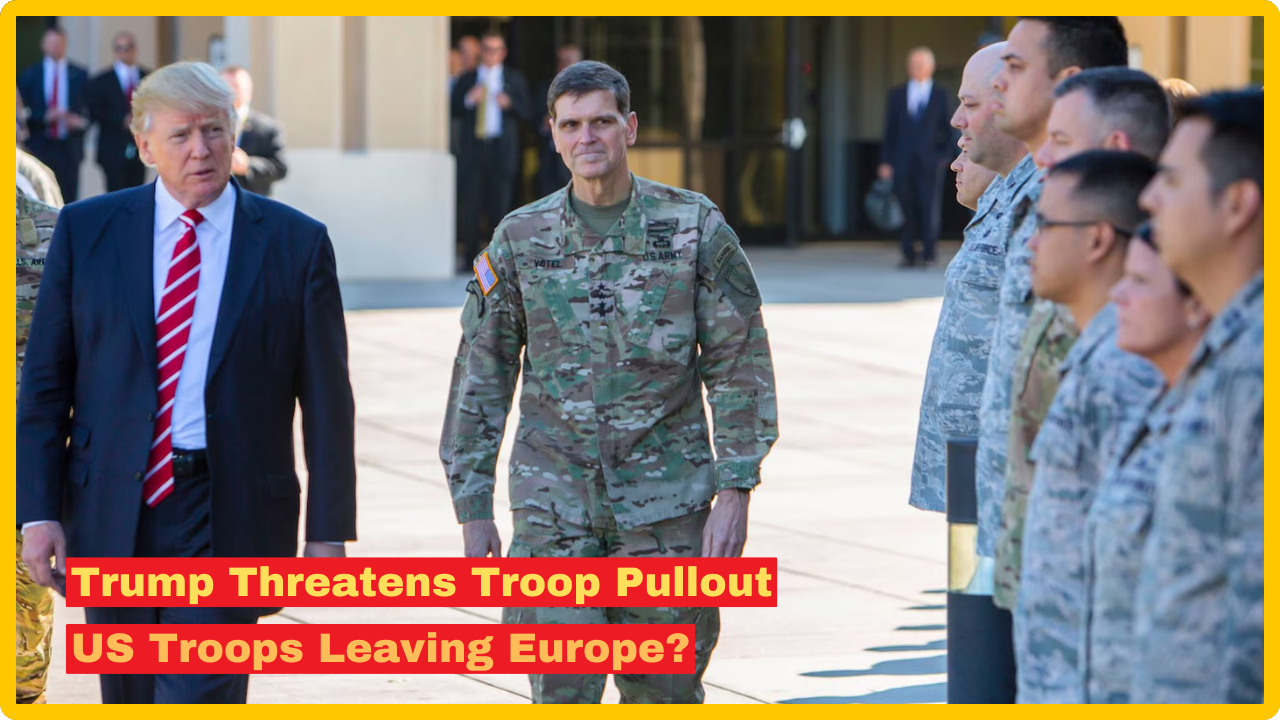
Trump Threatens to Withdraw US Troops From Italy, Spain as President Escalates Confrontation With European Allies After Italy and Spain Refuse to Back US Military Campaign. The transatlantic alliance that has underpinned Western security for more than seven decades took another serious blow Thursday when President Donald Trump told reporters at the White House he would “probably” pull American military forces out of Italy and Spain – two countries that host significant numbers of US troops and serve as critical nodes in America’s strategic infrastructure across Europe and the Middle East.
The remarks, made during an Oval Office press availability on April 30, came a day after Trump announced Washington was reviewing its military presence in Germany, and they represent the most direct and sweeping Trump withdraw US troops Italy Spain NATO threat yet in an escalating confrontation between Washington and its European partners over the Iran war.
The remarks were characteristic in their bluntness. When asked specifically whether he would consider pulling forces from Italy and Spain, Trump replied:
“Yeah, probably, I probably will. Why shouldn’t I? Italy has not been of any help to us, and Spain has been horrible, absolutely horrible.”
The comments sent shockwaves through European capitals and NATO headquarters in Brussels, even as the Pentagon scrambled to clarify that no final decisions had been made.
The Troop Numbers at Stake
To grasp the potential consequences of any Trump withdraw US troops Italy Spain NATO action, the scale of the American military presence in these countries is instructive. According to official Pentagon data as of December 31, 2025, the United States maintains 12,662 active-duty military personnel in Italy and 3,814 in Spain. Germany, which Trump targeted first and which remains the largest concentration of American forces in Europe, hosts more than 36,000 US troops.
These are not merely symbolic deployments. Italy’s Aviano and Sigonella air bases, along with the Naval Air Station at Naples, serve as critical logistics, intelligence, and operational hubs for US and NATO activities stretching from the Balkans through North Africa to the broader Middle East. Spain’s Rota naval base and Morón air base perform similarly strategic roles, including housing a rotational detachment of US Navy destroyers that provide ballistic missile defense coverage for much of southern Europe.
A genuine withdrawal – even a partial one – would not be a simple administrative exercise. Defense analysts have noted that any significant drawdown would require substantial planning, congressional notification, and a reordering of supply chains, pre-positioned equipment stocks, and bilateral basing agreements that have been developed over decades. Nonetheless, the political signal transmitted by Trump’s remarks has been received clearly in Rome, Madrid, and beyond.
The Iran War: The Root of the Rupture
The immediate trigger for Trump’s escalating confrontation with Italy, Spain, Germany, and other NATO members is the ongoing US-Israeli war against Iran, which began on February 28 with a series of airstrikes that most NATO allies learned about through news reports rather than advance diplomatic consultation. Germany was the notable exception, having been informed in advance of the initial strikes. The rest of the alliance was not.
European NATO members have, with varying degrees of firmness, declined to participate directly in the military campaign against Tehran. Several, including Germany and Italy, have permitted the United States to make use of their military infrastructure for logistics and non-offensive operations related to the conflict. None have permitted their bases to serve as launching pads for direct offensive strikes on Iran, citing concerns about the legality and strategic wisdom of the broader campaign.
Trump Threatens to Withdraw US Troops
Spain has been especially resistant. Madrid refused to allow its bases to be used for any Iran-related military operations, and Prime Minister Pedro Sánchez has been among the more vocal European critics of the American strategy, publicly calling for a diplomatic resolution and questioning the legality of the campaign under international law. It is this posture that has drawn Trump’s harshest censure.
Earlier this month, Trump singled out Italian Prime Minister Giorgia Meloni – previously considered one of his closest European allies – suggesting she lacked “courage” on the Iran issue. The shift in tone toward one of his most sympathetic European counterparts underscored how comprehensively the Iran war has reordered the political relationships within the alliance.
The Pentagon’s Leaked Email: Punishing Allies
The Trump withdraw US troops Italy Spain NATO threat did not emerge in a vacuum. It follows the publication, reported by Reuters approximately a week before Trump’s Oval Office remarks, of an internal Pentagon email that revealed the depth of the administration’s frustration with European allies and the options it had been considering to pressure them.
The email, reportedly originating from senior levels of the Department of Defense, outlined a menu of possible retaliatory measures against NATO members perceived as having failed to support American operations in the Iran war. Among the options under discussion was the suspension of Spain from the NATO alliance – a step that legal and military experts immediately characterized as legally unprecedented and practically impossible under the alliance’s founding treaty.
Former British Army Captain and Bath University warfare specialist Dr. Patrick Bury was among those who addressed the Spain suspension option directly. He noted that removing a member from NATO would require proof of a material breach of the alliance’s founding treaty — something Spain has not committed — and that there was no established mechanism under NATO’s founding documents to expel or suspend a member state.
The same email reportedly considered reassessing American diplomatic support for British-administered territories that have historically relied on US endorsement, including the Falkland Islands — a pointed reference to the long-standing Anglo-Argentine dispute that Britain won militarily in 1982. The inclusion of Britain in the Pentagon’s consideration of retaliatory options reflected the administration’s frustration with Prime Minister Keir Starmer, who has publicly refused to commit British forces to the Iran campaign.
European Reactions: Resolve Behind Closed Doors, Alarm in Public
Germany: “We Are Prepared for That”
The European response to the escalating Trump withdraw US troops Italy Spain NATO rhetoric has been a careful blend of public composure and private alarm. In Germany, Foreign Minister Johann Wadephul told reporters that Berlin is prepared for a possible reduction in American forces and that discussions are ongoing within NATO frameworks. German Chancellor Friedrich Merz, speaking at a military base in Münster, reaffirmed his government’s commitment to the transatlantic partnership, telling reporters: “This transatlantic partnership is particularly close to our hearts — and to mine personally.”
Merz has had his own recent friction with Trump. After the chancellor drew comparisons between the Iran campaign and the long American engagements in Afghanistan and Iraq — questioning whether the current strategy had a viable endgame — Trump responded sharply on social media, dismissing Merz as someone who “doesn’t know what he’s talking about.”
In Spain, Prime Minister Sánchez declined to engage directly with the Pentagon email when questioned by reporters at an EU leaders summit in Cyprus, saying his government relies on “official documents and positions, not informal communications.” His government has maintained that Spain’s decision to keep its bases out of the Iran conflict is lawful, consistent with Spain’s sovereign right to determine how its territory may be used, and in line with a historical precedent: in 1986, during American military action against Libya, both Spain and France declined to open their airspace and bases to US aircraft, without that refusal producing a lasting rupture in the alliance.
Italy’s Defense Minister, for his part, stated publicly that the strikes on Iran violate international law — a characterization that placed Rome on a collision course not only with Washington but with a foundational question about the legal basis for the entire campaign.
The Wider NATO Crisis: A “Paper Tiger” Alliance?
Trump’s remarks about Italy and Spain are part of a pattern of escalating rhetorical attacks on NATO that have intensified sharply since the Iran war began. He has referred to the alliance as a “paper tiger,” has repeatedly suggested he is considering withdrawing the United States from NATO entirely, and has framed European allies’ reluctance to join the Iran campaign as a betrayal of the alliance’s mutual defense obligations — even though NATO’s Article 5 collective defense clause has never been triggered in the context of this conflict, and legal experts have questioned whether the Iran war falls within NATO’s foundational mandate.
Dr. Bury of Bath University raised what many analysts consider the underlying question of the crisis: “He’s run NATO down so much, can it survive the next three years?”
The answer to that question may hinge less on any single troop withdrawal decision — which would face substantial logistical and legal hurdles regardless of Trump’s preferences — and more on whether the pattern of pressure, denunciation, and unilateralism that has characterized the administration’s approach to the alliance can be sustained without permanently fracturing the relationships that undergird it.
Conclusion
The Trump withdraw US troops Italy Spain NATO threat represents more than a tactical negotiating maneuver over burden-sharing or Iran war participation. It is the latest manifestation of a fundamental tension that has defined Trump’s relationship with the Western alliance across both of his presidential terms: a conviction that America’s European partners derive far more from the alliance than they contribute to it, and a willingness to use American military presence as a lever of political pressure in ways that previous administrations would not have contemplated.
Whether this approach ultimately produces greater European support for American strategic objectives – or accelerates the fracturing of an alliance that has kept major-power conflict out of Europe for eight decades – is the defining geopolitical question of the current moment.
Given that removing US troops from Italy and Spain would disrupt decades of carefully built military infrastructure and potentially weaken NATO’s overall deterrence posture, do you think Trump’s threats represent a legitimate and effective pressure strategy — or a dangerous gamble that could permanently damage the alliance?
Frequently Asked Questions (FAQ)
Q1: How many US troops are currently stationed in Italy and Spain, and what roles do they serve?
According to official Pentagon data as of December 31, 2025, the United States maintains 12,662 active-duty military personnel in Italy and 3,814 in Spain. These forces are not simply symbolic commitments — they serve critical operational functions. Italy’s Aviano and Sigonella air bases and the Naval Air Station at Naples are key hubs for US and NATO activities spanning the Balkans, North Africa, and the broader Middle East.
Spain’s Rota naval base houses rotational US Navy destroyers providing ballistic missile defense for southern Europe, while Morón air base serves as an important staging point for rapid response operations in the region. Any significant withdrawal would require substantial planning, congressional notification, and the renegotiation of bilateral basing agreements that have been in place for decades.
Q2: Why is the Trump administration threatening to withdraw troops from European NATO allies?
The immediate cause of the current confrontation is the US-Israeli war against Iran, which began on February 28, 2026, and was launched without advance notification to most NATO allies. European members of NATO — including Italy, Spain, Germany, and France — have declined to participate directly in the military campaign, citing concerns about its legality under international law and its strategic wisdom. Spain has been particularly resistant, refusing to allow US forces to use Spanish bases for any Iran-related military operations.
Trump has characterized these refusals as a failure of alliance solidarity and has linked them to longstanding complaints about European NATO members‘ defense spending levels, accusing allies of free-riding on American security guarantees while refusing to contribute meaningfully when American interests are at stake.
Q3: Could Trump actually suspend Spain from NATO, as reportedly discussed in an internal Pentagon email?
Legal and military experts say that suspending Spain from NATO is not legally or practically feasible under the alliance’s founding treaty. NATO’s founding documents do not include a mechanism for expelling or suspending a member state without that member having committed a material breach of treaty obligations — and Spain’s decision to refuse the use of its bases for offensive operations against Iran does not constitute such a breach.
Former British Army Captain and warfare specialist Dr. Patrick Bury noted that NATO members are “well within their rights to refuse access to their military bases,” citing the 1986 precedent in which both Spain and France denied the United States access to their airspace and bases during American military action against Libya without triggering any formal alliance consequences. While the Pentagon email discussing Spain’s suspension represents a serious signal of administration frustration, experts broadly agree it reflects political pressure tactics rather than a legally viable course of action.
Be First to Comment