
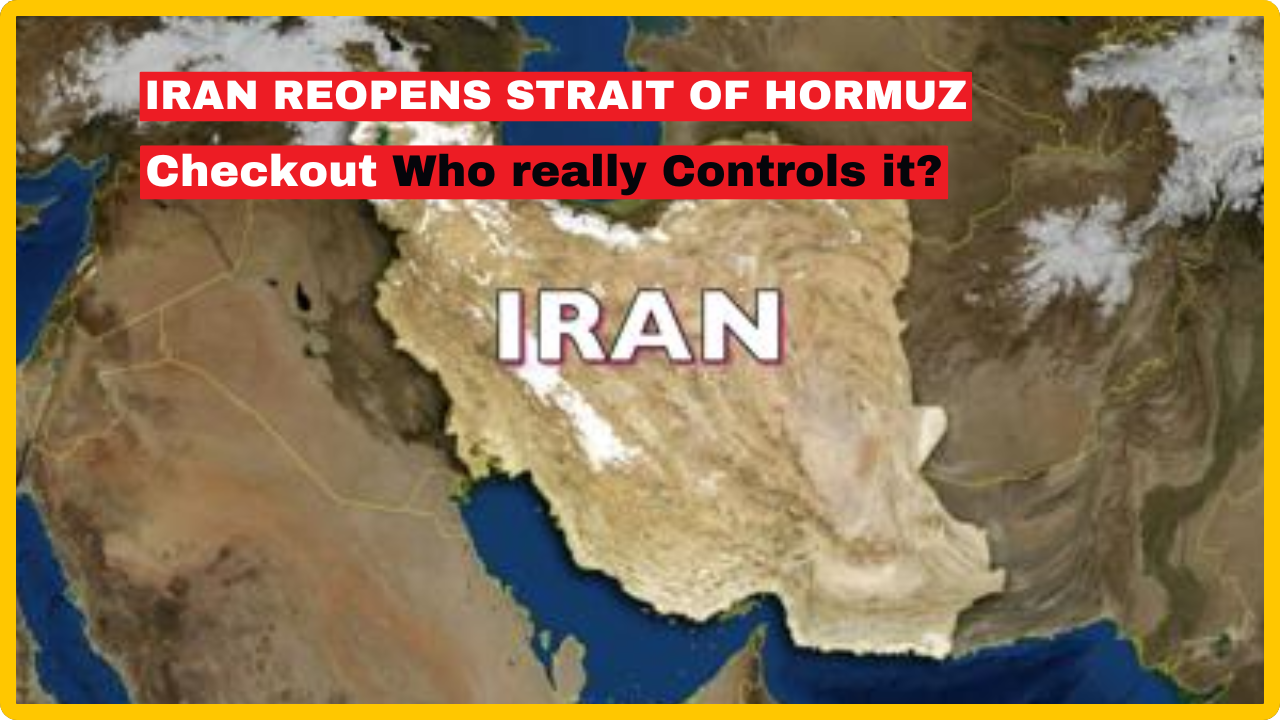
On Friday, April 17, 2026, Iran declared the Strait of Hormuz blockade became fully open to all commercial vessels, marking a significant shift in one of the most tense geopolitical standoffs in recent memory. However, President Donald Trump swiftly made clear that the U.S. Navy’s blockade on Iranian ships and ports would not be lifted until Tehran agrees to a comprehensive deal — one that must include a resolution on its nuclear program. The announcement came as a fragile 10-day ceasefire between Israel and Hezbollah appeared to be holding in Lebanon, adding a delicate but hopeful layer to an otherwise volatile situation.
The Ceasefire
The dramatic back-and-forth on Friday underscored just how uncertain the road to peace remains between Washington and Tehran. Iranian Foreign Minister Abbas Araghchi announced on X that the waterway – through which approximately 20% of the world’s oil supply passes – was now completely open to commercial vessels, linking the decision to the ceasefire holding in Lebanon.
Trump’s reaction was initially one of celebration. He took to social media praising the announcement, saying the strait was “fully open and ready for full passage.” But within minutes, he reversed tone entirely, posting that the U.S. Navy’s blockade would continue “UNTIL SUCH TIME AS OUR TRANSACTION WITH IRAN IS 100% COMPLETE.” PBS
This whiplash response from the White House reflects the broader complexity of the ongoing negotiations. The U.S. is not simply seeking a reopening of the strait — it wants a sweeping agreement that addresses Iran’s nuclear ambitions, its regional influence, and the broader military conflict that has already claimed thousands of lives.
The Blockade and What It Means
Trump imposed the naval blockade earlier this week after Iran restricted traffic through the strait, a move Iran claimed was a breach of the Pakistan-brokered ceasefire. At the time, Trump framed the blockade as an “all or none” policy to pressure Iran into reopening the waterway.
The Trump administration has used the blockade as a pressure mechanism, with the narrow waterway — through which a fifth of global oil trade passes — becoming a key point of leverage for both sides. Time
Iran’s Foreign Ministry pushed back strongly. Spokesperson Esmail Baghaei stated that the blockade was a violation of the ceasefire agreement and warned that if the U.S. fails to honor its commitments, Iran “will take the necessary reciprocal measures,” adding that “no leniency will be shown.” The Philadelphia Inquirer
Divisions Within Iran
Not everyone in Tehran appeared unified behind Araghchi’s announcement. Two Iranian semi-official news agencies, Fars and Mehr — both considered close to the powerful Revolutionary Guard — issued posts questioning the reopening decision, calling for “clarification” and suggesting that the supreme leader’s approval was required before the strait could officially be declared open. The Philadelphia Inquirer This signals potential internal friction within Iran’s political establishment, particularly as the country navigates a delicate power structure following reported injuries to Supreme Leader Mojtaba Khamenei early in the war.
Nuclear Question Remains Central
At the heart of all the diplomatic maneuvering is Iran’s nuclear program. Trump suggested on Friday that Iran had agreed to hand over its enriched uranium, posting that “The U.S.A. will get all Nuclear ‘Dust,’ created by our great B2 Bombers — No money will exchange hands in any way, shape, or form.” The Philadelphia Inquirer However, neither Iranian officials nor any international mediators have confirmed such an agreement, and Tehran has historically insisted on retaining its right to nuclear enrichment for civilian purposes.
Mediators are currently pushing for a compromise on three main sticking points: Iran’s nuclear program, the status of the Strait of Hormuz, and compensation for wartime damages. The Columbian
Oil Markets React
The markets responded to the diplomatic developments with cautious optimism. Oil prices fell on Friday as investors grew hopeful that the U.S. and Iran were moving closer to a deal. The head of the International Energy Agency had previously warned that the global energy crisis could worsen significantly if the strait remained closed. The Philadelphia Inquirer
A Ceasefire Under Strain
The broader ceasefire framework remains shaky. After marathon weekend talks failed to produce a final agreement, officials were considering a second round of negotiations before the two-week ceasefire expired on April 21. Trump indicated openness to extending the ceasefire if a deal was within reach, telling reporters: “If we’re close to a deal, would I extend? Yeah, I would do that.” Time
The human toll of the conflict is staggering. Fighting has killed at least 3,000 people in Iran, more than 2,100 in Lebanon, 23 in Israel, and over a dozen in Gulf Arab states — with 13 U.S. service members also losing their lives. PBS
“Will remain in full force until Tehran reaches a deal with the U.S., including on its nuclear program.” — President Donald Trump, via social media post, April 17, 2026
“The passage for all commercial vessels through the Strait of Hormuz is declared completely open for the remaining period of ceasefire.” — Abbas Araghchi, Iranian Foreign Minister, via X (formerly Twitter)
“No leniency will be shown in this regard.” — Esmail Baghaei, Iranian Foreign Ministry Spokesperson, quoted by Iranian state media
“Overall, the issue with the ceasefire deal is everyone, as usual, is claiming victory, and there are still continued violations of the ceasefire.” — Robert Geist Pinfold, Political Analyst and lecturer in international security at King’s College London Al Jazeera
What Really Happened.?
The Strait of Hormuz is a narrow but strategically vital waterway located between Iran and Oman, connecting the Persian Gulf to the Gulf of Oman and the Arabian Sea. Nearly a fifth of the world’s oil supply passes through it, making any disruption a matter of global economic concern.
The current standoff emerged from months of escalating tensions. Iran had long insisted on maintaining control of the strait, even proposing at one point that it collect toll fees from passing ships as war reparations. The U.S. rejected these terms outright.
The Pakistan-brokered two-week ceasefire, announced on April 8, 2026, followed 40 days of U.S.-Israeli strikes on Iran that had pushed the entire region to the brink of an all-out war. The truce came just hours after Trump posted a chilling warning on social media that “a whole civilization will die tonight.” Al Jazeera
Talks between Washington and Tehran have been indirect, largely channeled through Pakistani intermediaries, and have so far failed to bridge deep divisions over nuclear policy, sanctions relief, and regional security arrangements.
Conclusion of Strait of Hormuz Blockade
Friday’s developments represent both a step forward and a reminder of how far apart the two sides remain. Iran’s reopening of the Strait of Hormuz is a tangible gesture – one that global markets welcomed — but the continued U.S. blockade signals that Washington is not yet ready to ease pressure on Tehran. With the ceasefire set to expire on April 21, the next few days will be critical. Diplomats, mediators, and world leaders are watching closely to see if a lasting agreement can be struck — or whether the fragile calm unravels once again.
Will Iran and the U.S. reach a comprehensive deal before the ceasefire deadline, or is the world headed back toward the brink? The answer could reshape the Middle East — and global energy markets – for years to come.
Be First to Comment