
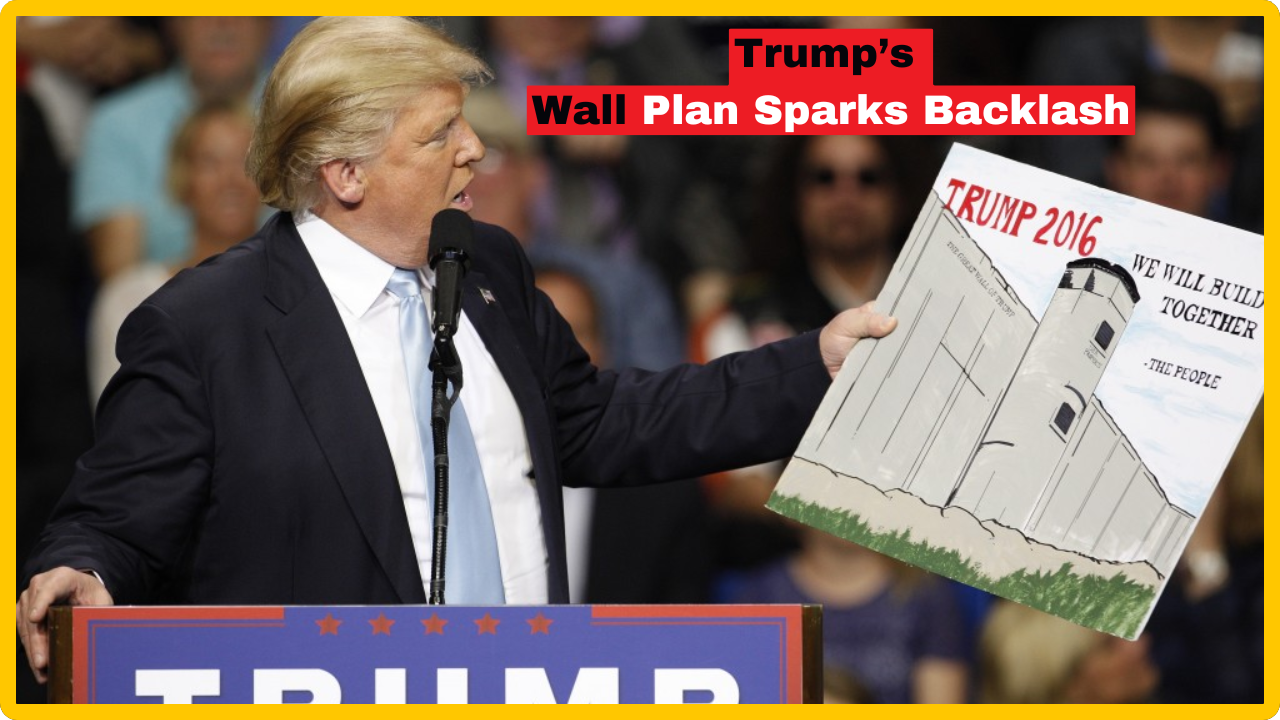
Trump border wall Big Bend National Park project is ongoing with the Trump administration’s plan to construct a border wall through one of America’s most remote and beloved wilderness areas has sparked a fierce bipartisan backlash that is now spilling into federal court.
In February 2026, the administration waived more than two dozen environmental laws to clear the way for a 150-mile-long border barrier through West Texas, a stretch that includes Big Bend National Park and the adjoining Big Bend Ranch State Park The Texas Tribune – a region defined by unscalable canyons, ancient desert landscapes, and the sweeping curves of the Rio Grande.
Residents, ranchers, river guides, sheriffs, and conservation groups have united in opposition, warning that the wall would permanently alter the land, destroy livelihoods, and serve no meaningful security purpose in one of the least-crossed sectors along the entire southern border.
What Is Trump Big Bend Border Wall Plan?
When the Trump administration announced plans to erect a border wall through the Big Bend region of West Texas, few people expected the response to cut across political lines the way it did. This was not a typical blue-versus-red border debate. This was something different — a rare moment where Republicans, Democrats, and Libertarians stood shoulder to shoulder, all saying the same thing: not here.
The idea of a border wall in Big Bend was once considered unthinkable. The far West Texas region is one of the most remote and sparsely populated places in the continental United States – a harsh, arid landscape that challenges human existence at every turn. The Rio Grande carves deep canyons through the region, some as deep as 1,500 feet, creating natural geographic barriers far more effective than any man-made structure. And yet, the administration pushed forward.
Trump border wall Big Bend National Park
The Trump administration waived over two dozen environmental laws to push ahead with plans for a 30-foot-tall border barrier, igniting anger from residents and drawing bipartisan opposition, including from local sheriffs who argued that the federal government should consult with local law enforcement before taking any action.
The plans initially called for barriers covering nearly every reachable stretch of the Rio Grande in both the national park and state park. Later, following a wave of community pushback, the scope appeared to shift. The U.S. Customs and Border Protection website updated its maps to show “virtual wall” detection technology — cameras, radar, and sensors — for the Big Bend area rather than a physical steel barrier, though officials have not made any formal announcement confirming the change is permanent.
Confusion and uncertainty remain. Internal emails obtained by Marfa Public Radio from Paul Enriquez, a Border Patrol infrastructure director, revealed that the parks were described as “currently low priorities,” but he added that once higher-traffic areas are addressed, the administration would revisit plans for the Big Bend region. In other words, the wall is not gone — it may simply be delayed.
What has made the Big Bend fight unlike almost any other border wall controversy in recent history is the breadth of opposition. It is not simply environmentalists or Democratic mayors pushing back. It is farmers, river guides, business owners, longtime Trump supporters, and law enforcement officials all raising the same alarm.
Terlingua resident Sean McGuire, who protests daily on the highway leading into town, described the unity he has witnessed as something he has never seen before: people from every political background standing together against the wall plan.
Five border county sheriffs wrote an open letter urging federal officials to shift toward a technology-based, terrain-informed approach to border security, rather than a physical wall. Axios Their argument was grounded in experience. The terrain itself, they said, is already the most effective deterrent in the region.
Presidio County Sheriff Danny Dominguez put it bluntly, noting that anyone who crosses the border in the Big Bend area faces a walk of at least three to four days through brutal desert conditions. The landscape does what a steel bollard wall never could.
The economic stakes are also enormous for a region whose identity and income are tied directly to the outdoors. River guide Charlie Angell, who runs a guide company and owns riverfront property, said that some wall plans would place the barrier as close as ten feet from his back door and potentially a mile north of the river — stripping residents of riverfront access and cutting animals off from their water source.
Lawsuit Filed Against the Trump Administration
The resistance moved from protests to courtrooms in April 2026. River guide Billy Miller, the nonprofit Friends of the Ruidosa Church, and the national environmental organization Center for Biological Diversity filed a federal lawsuit arguing that the administration’s regulatory waivers were unconstitutional and that the wall would sever public access to iconic sections of the Rio Grande corridor and cleave through the Chihuahuan Desert.
Miller, who has spent more than two decades guiding on the river, warned that losing access to the Rio Grande would effectively end his career and the careers of many others who depend on the river economy.
Attorney Emma Yip argued that the administration’s plan to build a coast-to-coast barrier constitutes precisely the kind of major question that requires explicit backing from Congress before proceeding. The lawsuit was filed in the Western District of Texas in El Paso.
Why the Data Does Not Support the Wall Here
Beyond the ecological and community concerns, the numbers themselves tell a clear story. In fiscal year 2025, Border Patrol recorded just 3,096 apprehensions in the entire Big Bend sector — representing only 1.3% of the 237,538 apprehensions recorded across the whole U.S.-Mexico border. This is the least active of all nine Border Patrol sectors, and experts say the geography is the primary reason.
Former Big Bend National Park superintendent Bob Krumenaker, now chair of advocacy group Keep Big Bend Wild, wrote in a letter to Congress that law enforcement across the political spectrum views a wall as simply unnecessary in this region, and that any harm to the communities and natural landscape would be far out of proportion to any potential benefit.
Congress approved $46.5 billion for the Trump administration’s border barrier efforts through the One Big Beautiful Bill Act, providing the financial muscle behind plans that critics say prioritize spectacle over strategy.
Why We are Seeing this?
Big Bend National Park has been a crown jewel of the American national parks system for decades. Carved from land in far West Texas, it sits along the looping bend of the Rio Grande that gives the region its name. The park draws hundreds of thousands of visitors each year who come for its ancient geological formations, rare desert wildlife including black bears and Texas bighorn sheep, hot springs, and river experiences that cannot be found anywhere else in the country.
The Trump administration’s broader border wall push dates back to the 2016 presidential campaign and was accelerated by the passage of major spending legislation that allocated tens of billions of dollars for barrier construction. The Big Bend sector became part of that push in early 2026, when contractors began appearing on the ground and private landowners started receiving eminent domain notices — the legal instrument through which the government can seize private property for public projects.
Sam Karas, a river guide and reporter for The Big Bend Sentinel, was among the first to break the story of wall plans in the park, describing the creeping realization as beginning with razor wire that kept expanding until it became clear a formal border barrier was being built without any public announcement or community input.
What Happens Next
The situation remains fluid. The CBP website has shifted its plans multiple times within just a few weeks, and no official statement has confirmed that a physical wall through the national park and state park is definitively off the table. Community leaders and activists say they are not declaring victory yet, noting that too many questions remain unanswered and that internal government communications suggest barriers in the parks could return once higher-priority areas are completed.
For the people of West Texas, this is not an abstract policy debate. It is about whether the rivers they guide, the land they farm, the businesses they run, and the landscapes that define their lives will still exist in the same form for their children. As one longtime resident put it, no one uproots the most rugged wilderness in the lower 48 states without a very good reason — and the data, the community, and even much of local law enforcement are all saying the same thing: there is no good reason here.
Will the federal courts protect one of America’s last great wild places – or will the wall come anyway? Share your thoughts and follow this story as it develops.


Be First to Comment