
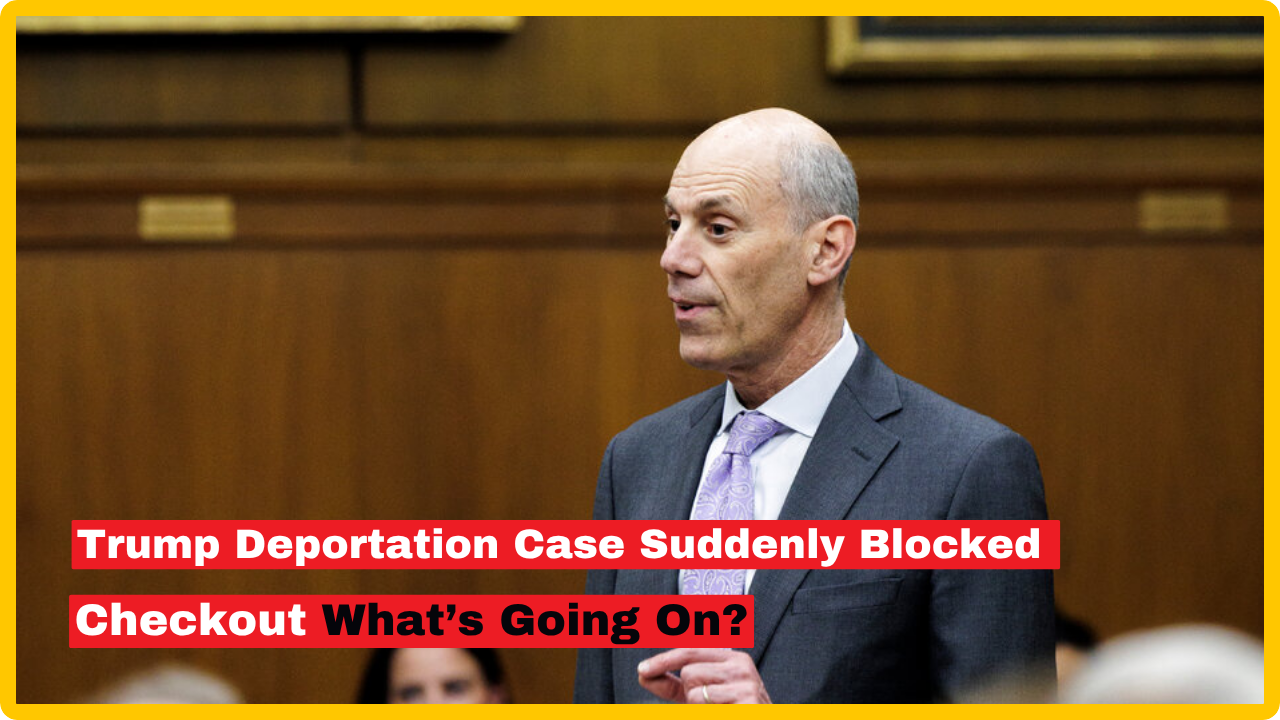
Why US appeals court blocks Trump deportation case, all you need to know is available here.
A U.S. appeals court has blocked a contempt case linked to deportation flights carried out during the administration of Donald Trump. The decision, issued in April 2026 by the U.S. Court of Appeals for the D.C. Circuit, pauses efforts to hold officials accountable for allegedly violating a prior court order. This ruling brings fresh attention to the limits of judicial authority and executive power in immigration enforcement.
Court Decision: Why the Contempt Case Was Blocked
The appeals court stepped in before the lower court could proceed with contempt charges, signaling concerns about how the case was being handled. According to the ruling, the district judge may have gone beyond legal boundaries by initiating contempt proceedings without fully addressing procedural requirements.
Contempt of court is not a routine action—it is a serious legal step used when a court believes its authority has been directly defied. In this case, the lower court argued that deportation flights continued despite an earlier order restricting such actions. However, the appeals court focused less on the alleged violation itself and more on whether the correct legal process had been followed.
By halting the case, the higher court has not ruled on whether any laws were broken. Instead, it has emphasized that even in politically sensitive matters, courts must operate within clearly defined limits.
Deportation Flights Controversy Explained
At the center of the dispute are deportation flights that reportedly continued during a period when restrictions were believed to be in place. These flights were part of broader immigration enforcement policies that aimed to increase the removal of undocumented migrants.
Critics argued that continuing such operations risked violating court orders, while supporters maintained that the actions were legally justified under federal authority. This disagreement created the foundation for the contempt case, which quickly escalated into a larger legal battle.
The appeals court’s intervention now puts that battle on hold, leaving the core issue unresolved but shifting the focus toward legal procedure rather than immediate accountability.
Legal Experts Weigh In on the Ruling
“This ruling underscores the importance of judicial restraint when dealing with executive actions,” said a constitutional law expert from Georgetown University Law Center. “Contempt powers are significant, but they must be applied carefully to maintain balance between branches of government.”
An immigration policy analyst at the Migration Policy Institute added, “The court didn’t settle the dispute—it redirected it. The legal fight is far from over, and we may see this issue return in a different form.”
Bigger Picture: Executive Power vs Judicial Authority
This case highlights a long-standing tension in the United States: how far courts can go in enforcing their rulings against the executive branch. Immigration policy, in particular, often sits at the center of this conflict because it involves national security, humanitarian concerns, and complex legal frameworks.
During the presidency of Donald Trump, immigration enforcement became a defining issue, with multiple policies facing legal challenges. Courts frequently issued temporary blocks or modifications, creating a fast-changing legal environment where agencies had to interpret and respond to evolving orders.
The appeals court’s decision reflects caution in this environment, signaling that enforcement of judicial authority must be balanced with respect for executive functions.
What Happens Next in the Case?
While the contempt case has been blocked for now, the legal story is far from finished. The lower court may attempt to revise its approach, or the matter could escalate to a higher judicial level for further clarification.
Legal experts suggest that future proceedings will likely focus on procedural correctness—ensuring that any enforcement action follows strict legal standards. This means the debate could shift from whether the deportation flights were justified to how courts should handle alleged violations.
For policymakers, the ruling may also influence how future immigration actions are structured to avoid similar legal challenges.
Conclusion: A Pause, Not the End
The appeals court’s decision is not a final verdict – it’s a pause that reshapes the legal battlefield. It reinforces the idea that process matters just as much as policy, especially in high-stakes issues like immigration.
As this case develops, one key question remains: will courts take a stronger role in enforcing compliance, or will limits on judicial power become more clearly defined?
That answer could shape future immigration policies and the balance of power in the United States for years to come.




Be First to Comment