
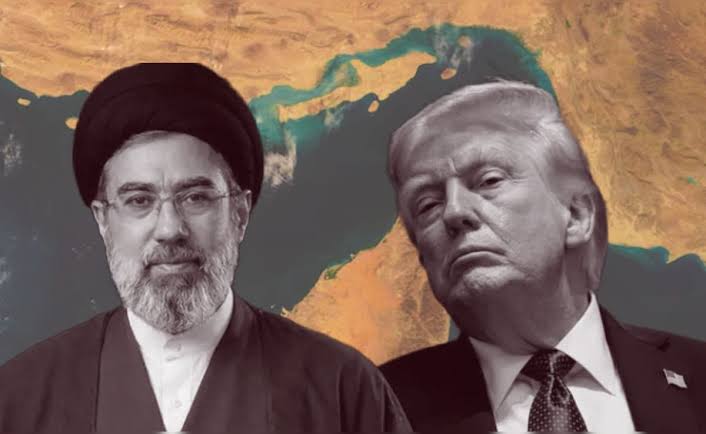
After a tense and dangerous weekend of exchanged missile and drone strikes, the United States and Iran have agreed to pause hostilities and return to the negotiating table. A U.S. official confirmed on Sunday, June 29, 2026, that both nations will “stand down for now” — allowing commercial vessels to pass freely through the Strait of Hormuz — while diplomatic channels are reopened for technical talks in Doha, Qatar. The announcement came just days after strikes on both sides threatened to unravel the fragile Islamabad Memorandum of Understanding signed only two weeks prior on June 17.
What Happened: A Weekend of Strikes and Tension
What began as a promising diplomatic breakthrough has hit a serious wall. The brief but alarming escalation started when an Iranian projectile struck a Singapore-flagged cargo vessel navigating the Strait of Hormuz last Thursday. The U.S. interpreted the attack as a clear violation of the recently signed ceasefire agreement and responded with military force.
U.S. Central Command carried out retaliatory strikes on Iranian missile and drone storage facilities, as well as coastal radar installations. President Donald Trump made his position crystal clear in a post on Truth Social, writing that American aircraft had struck Iranian targets for violating the ceasefire “AGAIN,” and warning that a point may come when the U.S. is “no longer able to be reasonable.”
Rather than backing down, Iran escalated further. Tehran’s Islamic Revolutionary Guard Corps launched ballistic missiles and drones targeting U.S. military facilities — including the Ali Al Salem Air Base in Kuwait and the Fifth Fleet headquarters in Bahrain. According to a U.S. official who spoke with CBS News, none of those projectiles reached their intended targets; several were intercepted or shot down, and no American personnel were wounded.
By Sunday morning, however, both governments appeared to step back from the edge. A U.S. official told Reuters: “Both sides will stand down for now and vessels can move freely.” A senior administration official also told CNN that technical talks regarding the memorandum of understanding remain “on track,” despite the chaotic weekend.
The Strait of Hormuz: Heart of the Dispute
The Strait of Hormuz is no ordinary body of water. Before the war that began in February 2026, the narrow passage handled roughly 20% of the world’s oil and liquefied natural gas shipments. Whoever controls it holds enormous leverage over global energy markets — and Iran knows it.
The core of this latest flare-up stems from conflicting interpretations of what the Islamabad MOU actually says about the Strait. Iran’s newly created Persian Gulf Seaways Management Organization declared that vessels not traveling along specifically designated routes near Iranian waters would not be guaranteed safe passage. The Iranian navy backed this position, arguing that the route used by the Singapore-flagged ship — which hugs the Omani coastline — had not been officially approved by Tehran.
The United States and the international community see it differently. The MOU clearly states that Iran committed to facilitating the safe passage of commercial ships “with no charge, for 60 days only” following the agreement’s signing. The ship that was struck was using a route that the United Nations had also been using to escort vessels stranded in the Persian Gulf during the conflict.
This clash in interpretation is what ignited the weekend’s dangerous exchanges — and it remains an unresolved issue heading into the next round of talks.
What Comes Next: Doha Talks and a Fragile Window
Despite the confusion and the violence, there is cautious diplomatic movement. According to Axios, both sides have agreed to meet in Doha, Qatar on Tuesday to resume the technical discussions that were originally taking place in Switzerland before the crisis broke out. The focus of those talks is expected to shift from Iran’s nuclear program — which was the original agenda — to the more immediate question of managing the Strait of Hormuz going forward.
Iran, for its part, has sent mixed signals. Iranian state television quoted the country’s deputy foreign minister saying that “no technical meetings of the working groups are planned for this week,” which directly contradicts what U.S. officials were saying publicly. That discrepancy alone reveals how uncertain and unstable this diplomatic process still is.
There was at least one piece of positive financial news over the weekend. Iranian President Masoud Pezeshkian confirmed, according to state media, that $6 billion in frozen Iranian assets currently held in Qatar are set to be released — a provision written directly into the Islamabad MOU. The release of frozen funds was one of Iran’s primary conditions for cooperation, and its fulfillment could serve as a stabilizing incentive for Tehran to remain at the table.
U.S. Official to Reuters:
“Both sides will stand down for now and vessels can move freely.”
President Trump on Truth Social (Saturday):
“United States aircraft just struck Iranian missile and drone storage locations, and coastal radar sites, for violating the Cease Fire Agreement, AGAIN!”
A Senior U.S. Administration Official to CNN:
Technical talks regarding the MOU are still “on track” despite the exchange of fire.
Iranian President Masoud Pezeshkian (via state media):
“$6 billion out of the total $12 billion of Iranian resources in Qatar will be released and returned to the country.”
How Did We Get Here?
To understand this weekend’s chaos, you have to go back to February 28, 2026, when the United States and Israel launched large-scale military operations against Iran — marking the beginning of what became a full-scale war in the Middle East. The conflict, which also spilled into Lebanon involving Hezbollah, reshaped the region in a matter of months.
After months of fighting and tentative ceasefire attempts — including a temporary two-week truce in April — serious negotiations began to take shape through Pakistani and Qatari mediation. On June 17, 2026, President Trump and Iranian President Pezeshkian signed the Islamabad Memorandum of Understanding. The 14-point document called for an immediate end to military operations on all fronts, the toll-free reopening of the Strait of Hormuz for 60 days, and the start of nuclear negotiations — all within a 60-day framework that can be extended by mutual consent.
The MOU was hailed as a historic diplomatic breakthrough, but skeptics noted from the start that it left the most difficult questions — Iran’s nuclear program, long-term management of the Strait, and sanctions relief — to be resolved in follow-up talks. The events of this past weekend proved those concerns were well-founded.
Vice President J.D. Vance had previously announced that the two sides agreed to set up a direct military-to-military communication channel to coordinate shipping through the Strait. Iran denied any such channel existed, and as of Saturday, U.S. officials confirmed that no operational hotline was in place. That communication gap almost certainly contributed to the rapid escalation of the past few days.
What’s at Stake: More Than Just Oil
The implications of this diplomatic standoff go well beyond energy prices, though those are significant enough. The Strait of Hormuz is a chokepoint for global commerce. Any sustained disruption there reverberates in fuel costs, shipping insurance rates, and broader market confidence worldwide.
More critically, the 60-day negotiation window set by the MOU is already ticking. Every day consumed by military exchanges and diplomatic confusion is a day lost from the narrow timeframe in which both sides are supposed to hammer out the far more complex final agreement — particularly on Iran’s nuclear capabilities. The MOU requires Iran to maintain the current status quo of its nuclear program, meaning no new enrichment advances, while the U.S. refrains from imposing fresh sanctions.
The stakes are high. Analysts watching the region closely note that if the two sides cannot resolve even the question of shipping routes within the first two weeks of the agreement, the prospects for a lasting nuclear deal within 60 days look increasingly challenging.
Conclusion: Fragile Ground, Critical Moment
Sunday’s announcement that both the U.S. and Iran will “stand down” is a relief, but it is not a resolution. The fundamental disagreements about who controls the Strait of Hormuz, how Iranian assets will be unfrozen, and what Iran’s nuclear future looks like all remain on the table. The Doha meeting, if it takes place as U.S. officials indicate, will be a critical test of whether both sides can move past the weekend’s violence and refocus on the larger diplomatic goal.
The world is watching. Commercial shipping operators are still navigating confusion about which routes are truly safe. Gulf nations like Bahrain and Kuwait were hit by Iranian missiles this weekend — a sobering reminder that the conflict’s fallout extends well beyond the two primary parties.
Whether Sunday’s “stand down” becomes a lasting reset or just a brief pause before the next escalation may well define not only the future of U.S.-Iran relations, but the stability of the entire Middle East for years to come.
What do you think — can the U.S. and Iran reach a final deal within the 60-day window? Share your thoughts below.
Be First to Comment